Expert Fungal Nail Treatments in Croydon
Have you noticed your toenails becoming thick, yellow, or brittle?
Are you tired of hiding your feet? Fungal nail infections are incredibly common, but they rarely resolve on their own. Over-the-counter paints often fail, leaving you frustrated and self-conscious.
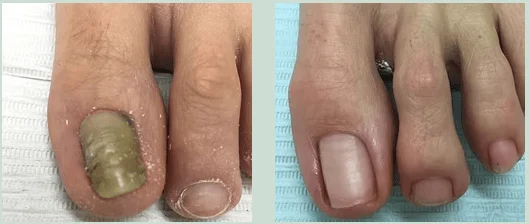
Improving Your Foot Health
At MediPedicure, located conveniently on Brighton Road, South Croydon, our expert podiatrists and foot care specialists provide highly effective, clinically proven fungal nail treatments. We help clients from across Croydon and Surrey restore the health, appearance, and comfort of their feet.
Whether you are looking for a podiatrist near you, suffering from painful thickened nails, or simply want your clear, healthy toenails back in time for your next holiday, we are here to help.

The Medi Pedicure Difference
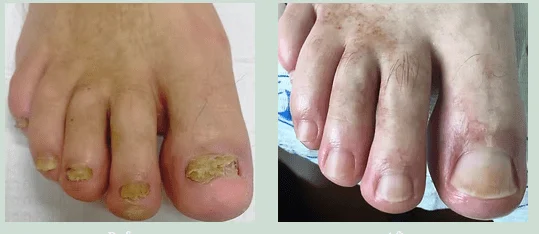
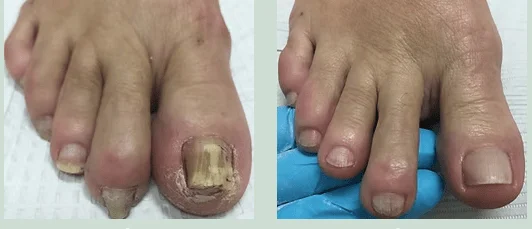
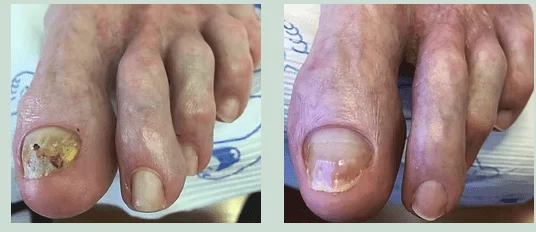
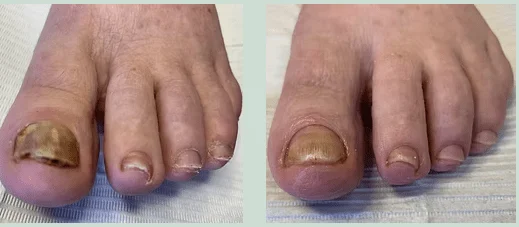
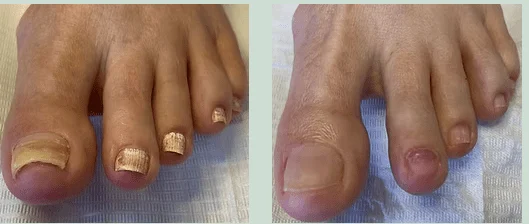
What is a Fungal Nail Infection
(Ony-chomy-cosis)?
A fungal nail infection, medically known as onychomycosis, occurs when fungi (usually dermatophytes) invade the nail bed and the nail plate. These microorganisms thrive in warm, dark, and moist environments, making our shoes the perfect breeding ground.
Because people don’t always search for fungal nail treatment, you might be experiencing this condition if you are searching for solutions to:
Yellow, brown, or white discolouration on the nail plate
Thickened toenails that are difficult to cut with standard clippers
Crumbly, brittle, or ragged nails that seem to break apart easily
A distorted nail shape or nails lifting from the nail bed
A foul odour coming from the infected toe
Pain or discomfort when wearing tight shoes or walking
If you recognise any of these symptoms, it is time to seek professional chiropody and foot care.
Why Choose Medi Pedicure for Your Nail Fungus Treatment?
Treating nail fungus requires patience and the right clinical approach. Here is why patients in South Croydon trust Medi Pedicure for their treatments
01
Expert Podiatric Care
Our trained specialists understand the precise biology of the nail. We don’t just treat the symptom; we target the root cause of the infection.
02
Advanced Clinical Tools
We use sterilised, medical-grade equipment to painlessly reduce thickened nails, allowing anti-fungal treatments to penetrate deeply.
03
Tailored Treatment Sessions
No two infections are exactly alike. We assess the severity of your condition and create a bespoke treatment plan.
04
Preventative Education
We guide you on footwear hygiene, foot care routines, and preventative measures to ensure the infection does not return.
Our Fungal Nail Treatment Process
Our comprehensive approach ensures the highest chance of clearing the infection completely.
Step 1: In-Depth Consultation and Diagnosis
Not all discoloured or thickened nails are fungal; sometimes they are caused by trauma (like dropping something on your toe) or underlying conditions like psoriasis. We begin with a thorough examination of your feet and footwear to confirm the presence of a fungal infection.
Step 2: Nail Reduction and Preparation (Debridement)
This is the crucial step that over-the-counter remedies miss. Fungi live under and inside the nail plate. Using professional podiatry drills, we painlessly thin down the thickened, infected nail. This immediately improves the appearance of the nail, relieves shoe pressure, and most importantly, removes the bulk of the fungal spores.
Step 3: Targeted Anti-Fungal Therapy
Once the nail barrier is reduced, we apply highly concentrated clinical anti-fungal treatments directly to the nail bed where the active infection lives. Because the nail is thinner, the medication can actually reach the source.
Step 4: Ongoing Care and Eradication Plan
Toenails grow very slowly (about 1-2mm per month). We will schedule follow-up appointments to continually reduce the infected nail as the new, healthy, clear nail grows out from the base.
Serving Croydon and Surrounding Areas
Located on Brighton Road, South Croydon (CR2), Medi Pedicure is perfectly situated for easy access.
- South Croydon & Central Croydon
- Purley & Kenley
- Sanderstead & Selsdon
- Shirley & Addiscombe
- Coulsdon
- Waddon & Wallington
Located on Brighton Road, South Croydon (CR2), Medi Pedicure is perfectly situated for easy access.
Frequently Asked Questions
Medical Pedicures at Medipedicue
How do I know for sure if I have a fungal nail infection?
While yellowing and thickening are strong indicators, our specialists can visually diagnose the condition during your consultation. If necessary, we can arrange for a nail clipping to be tested to confirm the exact strain of fungus.
Is the treatment painful?
Not at all. The nail reduction process (drilling/filing) is completely painless because nails consist of dead keratin (like your hair). Patients often report immediate relief if their thickened nails were previously rubbing against their shoes.
How long does it take to cure a fungal nail infection?
Nail fungus is stubborn. Because we have to wait for a completely new, healthy nail to grow from the root to the tip, it typically takes 6 to 12 months for a toenail to fully replace itself. However, you will notice a significant cosmetic improvement immediately after your first session when we reduce the thick, discoloured nail.
Why didn't the pharmacy nail paint work for me?
Over-the-counter (OTC) lacquers often fail because they cannot penetrate the hard, thickened keratin of an infected nail. The fungus lives underneath the nail plate. By having your nail professionally reduced at Medi Pedicure first, topical treatments become vastly more effective.
Will I have to have my toenail removed?
In the vast majority of cases, no. We aim to save the nail by treating the infection. Total nail removal (avulsion) is an absolute last resort, usually only recommended if the nail is severely deformed and causing extreme, chronic pain.
Can I still wear nail polish while treating the infection?
Standard nail polishes trap moisture and block light, creating the perfect environment for fungus to thrive and spread. We strongly advise against wearing standard polish during treatment. However, we can recommend specialised, breathable antifungal polishes for special occasions.
How did I catch this infection?
Fungal spores are highly contagious. You may have caught it by walking barefoot in a public swimming pool, a gym changing room, or a hotel bathroom. It can also spread from athlete’s foot (a fungal skin infection) into the nails, or develop from wearing tight, sweaty shoes for prolonged periods.
Does foot hygiene play a role in recovery?
Absolutely. During your treatment, we will advise you to wash your feet daily, dry them thoroughly (especially between the toes), wear moisture-wicking socks (such as cotton or bamboo), and use antifungal sprays in your shoes to prevent reinfection.
Can fungal infections spread to other toes or family members?
Yes. It is very common for the infection to start in the big toe and spread to the smaller toes, or even to your fingernails. Sharing towels, nail clippers, or shower spaces can also pass the infection to people you live with. Early treatment is the best way to protect yourself and your family.
Ready to Step Out with Confidence?
Don’t let a fungal nail infection dictate the shoes you wear or stop you from enjoying barefoot activities. The sooner you start treatment, the faster you can achieve clear, healthy nails.