Cracked Heel & Fissure Treatment in Croydon
Do your heels constantly snag on your socks, tights, or bedsheets?
Are you dreading sandal season? Do your heels constantly snag on your socks, tights, or bedsheets? Perhaps the dry skin on your feet has split so deeply that every step feels like walking on a razor blade.
Cracked heels are far more than just a cosmetic annoyance. Left untreated, they can become incredibly painful, bleed, and even lead to dangerous bacterial infections.
EXCELLENT Based on 21 reviews
 Posted on Google
 Eric MengiMy honest review,I am very happy with the treatment I got for my fungal nail.I waited a few weeks before I posted my review because I wanted to see if the treatment recommended worked. I can see an incredible improvement in my nail since my last appointment. I have been struggling with fungal nail for years and tried multiple other treatments which did nothing for me. I highly recommend Medical Pedicure clinic.Posted on Google
 Celia Addo MensahAn excellent reception and treatment received at Medical Pedicure. Podiatrist Maliheh was very nice and had confidence during the session . Maliheh followed her Superiors' instructions and did a fantastic jobPosted on Google
 Paige HarrisAmazing experience! My first medical pedicure - My feet feel so clean, soft and refreshed. The treatment was professional, thorough and relaxing. I’ll definitely be coming back!Posted on Google
 Nirmala AnthonipillaiExcellent service. Renda provided a beautiful treatment for my toe nail fungal infection that I feel much better and healthier on my nail. Thank you .Posted on Google
 Mehroz NaeemAmazing I have the deluxe medical pedicure and I left feeling line I am on cloud 9! Renda is amazing, skillful and is so kind to explain every step what she is doing with good level of clinic background! 100 percent it’s worth every penny! Without any judgement Renda took care of my feet with great passion!Posted on Google
 James Swann-PhillipsReally great service, strongly recommend.Posted on Google
 Vesta RoyI went because of ingrown toe nails, service and professionalism was 5 stars Now my feet are comfortable within my shoes again I definitely would recommend to family and friends or anyone who requires good servicePosted on Google
 Sam GboSkilled podiatrist, made me feel comfortable and confident about my feet, I have been embarrassed of my feet for years and she came and restored them to a healthy condition, I will definitely be coming backPosted on Google
 Donna HenryI had my ingrown toe nail removed,it was such a pain free process. I highly recommend this service.Posted on Google
 Amy SavageI had been struggling with a painful ingrown toenail for months and finally booked an appointment with MediPedicure Clinic after searching for an ingrown toenail specialist in Croydon. The podiatrist was friendly, professional and explained everything before starting treatment. The pain was relieved almost immediately, and I couldn't believe how much better my toe felt afterwards. The clinic was immaculate, and I wouldn't hesitate to recommend them to anyone needing professional ingrown toenail treatment.
Safe and Careful Nail Treatments For Diabetics
At Medi Pedicure, located on Brighton Road, South Croydon, our highly skilled podiatrists provide instant, painless relief for severe dry skin and cracked heels. We use clinical, sterilised instruments to remove the hard skin safely, transforming rough, painful feet into smooth, healthy heels in just one session.
Whether you are searching for a podiatrist for cracked heels, struggling with bleeding heel fissures, or simply want perfectly smooth feet without the hassle of useless home foot files, we are here to provide professional clinical care.

What are Cracked Heels (Heel Fissures)?
When the skin around the rim of your heel becomes excessively dry and thick (a condition known as hyperkeratosis), it loses its natural elasticity. When you stand, your body weight places immense pressure on the heel fat pad, which expands outward. Because the thickened skin is too rigid to stretch, it simply snaps open under the pressure.
These splits are medically known as heel fissures.
Thick, yellowish, or brown crusty skin around the entire border of the heel
Deep vertical splits or cuts in the skin that sting in the shower
A snagging sensation when taking off socks or sleeping
Bleeding or clear fluid seeping from the cracks
Pain when walking barefoot or standing for long periods
A feeling of "tightness" in the skin around the back of the foot
Why Do Heels Crack?
Understanding the root cause is essential for stopping the cracks from returning. The most common reasons include:
Open-Backed Shoes & Flip-Flops
Shoes with no back allow the heel pad to expand sideways unhindered, accelerating the stretching and splitting of the skin.
Prolonged Standing
Long shifts on hard floors (like nursing, retail, or teaching) place constant, repetitive downward pressure on the heel.
Dry Skin (Anhidrosis)
Some people naturally lack moisture in their feet. As we age, our sweat glands become less active, making the skin brittle.
Fungal Infections
“Moccasin-type” Athlete’s foot presents as dry, powdery, flaky skin on the soles and heels, can be mistaken for standard dry skin.
Biomechanics & Weight
Being overweight or having an altered gait (how you walk) can place excessive force on the heel strike with every step.
Medical Conditions
Diabetes, an underactive thyroid, and eczema all drastically reduce the skin’s ability to retain moisture and heal.
When Does a Cracked Heel Become Dangerous?
For most people, a cracked heel is painful and unsightly. However, if the fissure splits deeply enough to break through the epidermis (the top layer of skin) and into the dermis (where the blood vessels and nerves live), it becomes an open wound.
Once bleeding occurs, the fissure is a direct gateway for bacteria to enter the body, which can lead to cellulitis (a serious skin infection). For patients with diabetes or poor circulation, a bleeding cracked heel is a medical emergency that can quickly deteriorate into a dangerous foot ulcer. You must never attempt to treat bleeding heels at home.
The Medi Pedicure Treatment Process: Instant Relief
Throw away the harsh pumice stones and ineffective high-street creams. Our clinical treatment takes just 45 minutes and provides results that are impossible to achieve at home.
Step 1: Clinical Assessment
We thoroughly assess the depth of the fissures, check for signs of bacterial or fungal infection, and evaluate your footwear and biomechanics to determine why the cracks formed.
Step 2: Painless Scalpel Debridement
Using a sterile, single-use surgical scalpel, our podiatrists skillfully and gently shave away the thick, inflexible yellow callus surrounding the heel. Because this skin is entirely dead, the procedure is completely painless. By removing the rigid "walls" of the fissure, we remove the tension pulling the crack apart.
Step 3: Mechanical Smoothing
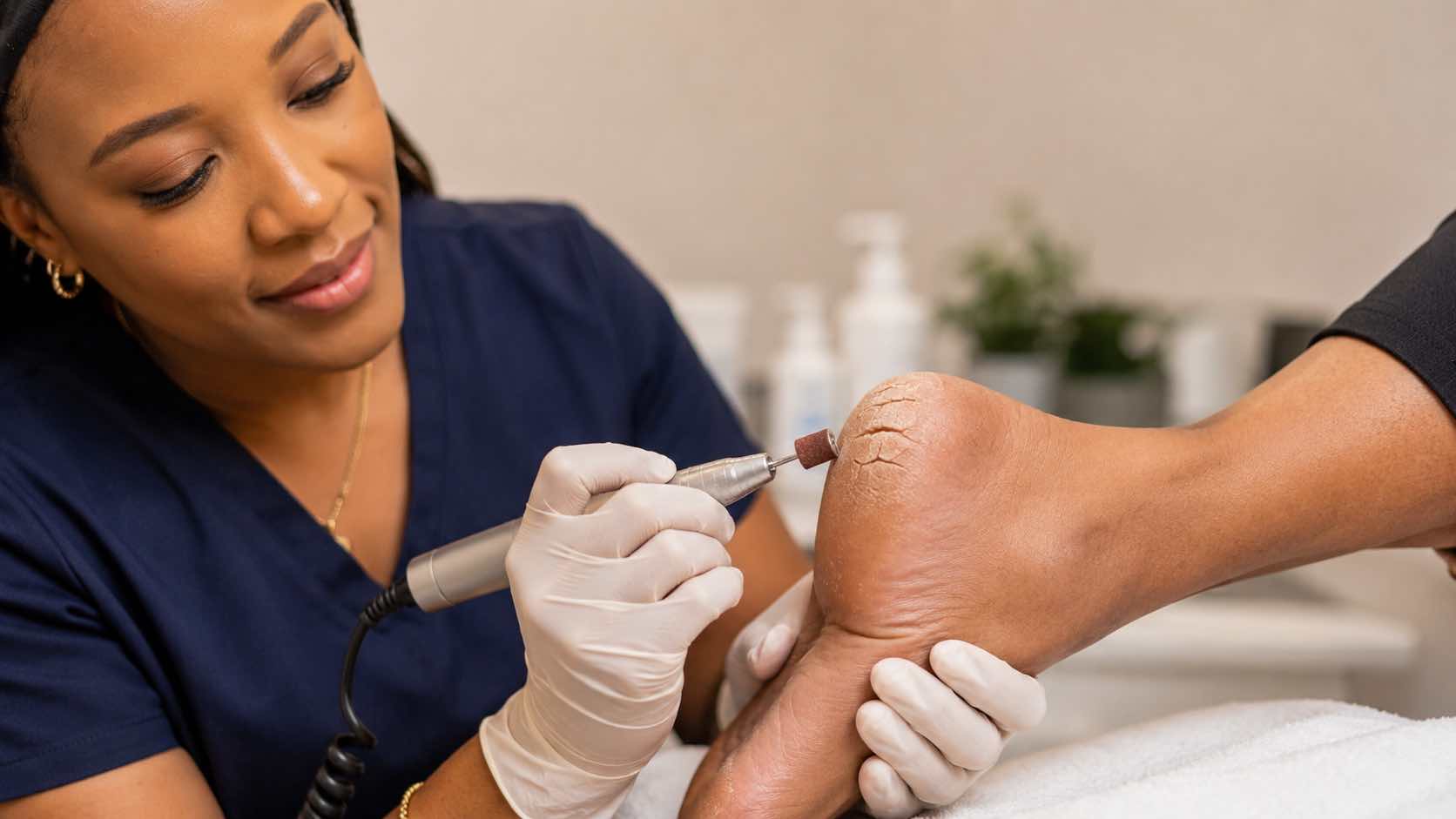
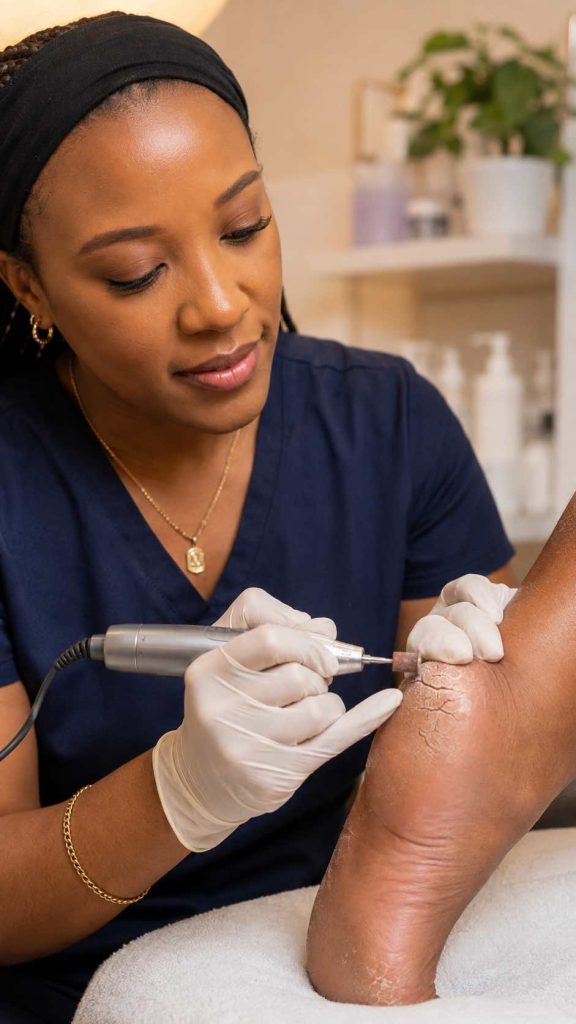
Once the bulk of the hard skin is gone, we use a specialised, high-speed podiatry drill (sanding file) to completely smooth the edges of the fissures and refine the skin's texture, leaving it soft to the touch.
Step 4: Medical Dressings (If Required)
If your fissures are bleeding or severely deep, we will apply sterile, antiseptic dressings or clinical tissue glue to seal the skin, prevent infection, and allow the healthy tissue beneath to heal rapidly.
Step 5: Intensive Emollient Therapy
We massage a professional-grade, high-percentage urea cream deeply into the fresh skin. Urea is a humectant, meaning it actively draws moisture from the air and deeper tissues directly into the dry epidermis.
Serving Croydon and Surrounding Areas
Our modern, welcoming clinic at Collaborative One, 360 Brighton Road, South Croydon (CR2 6AL) is easily accessible, making it simple to get the premium foot care you deserve. We regularly welcome clients from:
- South Croydon & Central Croydon
- Purley & Kenley
- Sanderstead & Selsdon
- Shirley & Addiscombe
- Coulsdon
- Waddon & Wallington
Located on Brighton Road, South Croydon (CR2), Medi Pedicure is perfectly situated for easy access.
Frequently Asked Questions
We want to ensure you have all the information you need. Here are the answers to the most common questions about heel fissures.
Does the treatment hurt, especially if my heels are already painful?
No. In fact, it is one of the most relieving treatments we offer. The pain you feel when walking is caused by the thick, hard skin pulling and tearing at the healthy skin beneath it. When we painlessly shave that hard skin away with a scalpel, the tension is immediately released. The vast majority of our patients walk out feeling instantly lighter and completely pain-free.
Why do my cracked heels get worse when I use a foot file at home?
Aggressive filing creates intense heat and friction. Your body interprets this friction as damage or an attack. In response, it rapidly produces even more thick, hard skin to protect the heel. Furthermore, standard foot files cannot reach the bottom of a deep fissure; they only tear the edges, leaving the crack intact. Only a podiatrist can safely remove the skin to the exact correct depth.
Are acid foot peeling socks good for cracked heels?
We strongly advise against them. Foot peels use uncalibrated acids (like alpha-hydroxy acid) that strip skin indiscriminately. They often burn the delicate, thin skin on the top of your foot while completely failing to penetrate the thick, stubborn callus on your heels. They also leave your feet peeling and vulnerable for weeks.
What kind of cream should I be using?
Standard body lotions and moisturisers do not work on feet. The skin on your soles is up to ten times thicker than the skin on your face. You must use a dedicated foot cream containing Urea (usually between 10% and 25%). Urea physically breaks down the tough keratin in the dead skin cells while simultaneously drawing water into the skin. We stock and recommend clinical-grade urea creams in our clinic.
Will one appointment fix my heels completely?
If your fissures are shallow, one treatment will leave them completely smooth. If your cracks are exceptionally deep, it may take one or two follow-up appointments to safely reduce the skin without causing bleeding, while allowing the healthy tissue underneath to repair itself.
Why are my heels dry even in the winter when I wear socks?
Winter brings central heating, which aggressively dries out the air in your home. Furthermore, wearing heavy, non-breathable socks (like nylon or polyester blends) can cause your feet to sweat and then dry rapidly, pulling moisture out of the skin.
Can I still have a pedicure if my heels are bleeding?
If your heels are actively bleeding, do not go to a standard cosmetic nail salon. The foot baths can harbor bacteria, and the beauty therapists are not medically trained to manage open wounds. You must see an HCPC-registered podiatrist. We treat bleeding heels in a sterile, dry environment to ensure they heal safely without infection.
How do I stop my heels from cracking again?
Maintenance is key. After we restore your heels to a smooth condition, you must apply a urea-based foot cream every single night. Avoid walking barefoot, switch from open-backed flip-flops to supportive sandals with a heel cup, and book a routine podiatry maintenance appointment every 6 to 8 weeks.
Step Into Comfort Today
Stop hiding your feet and suffering through the stinging pain of cracked heels. Experience the immediate relief of professional, clinical podiatry care.