Professional Corn & Blister Treatment
Are you experiencing a sharp pain in your foot or a painful, fluid-filled blister?
Are you experiencing a sharp, stabbing pain in your foot that feels like you are constantly stepping on a small stone or a piece of glass? Or perhaps a painful, fluid-filled blister is making every step agony after a long walk or wearing new shoes?
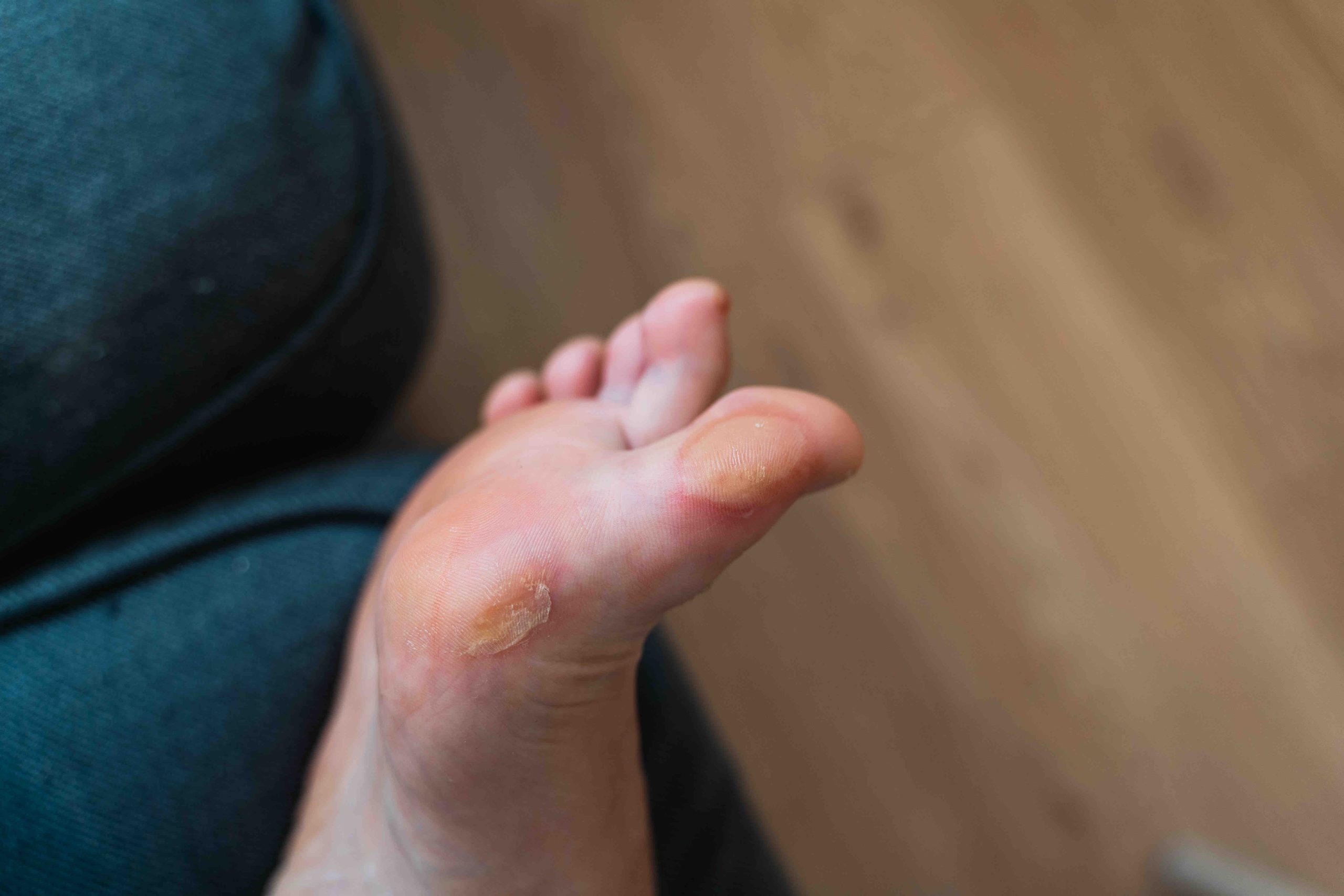
Reduce The Pain, Get Back on Your Feet
At Medi Pedicure, situated on Brighton Road, South Croydon, our highly trained, HCPC-registered podiatrists provide instant, painless relief for debilitating corns and severely painful friction blisters. We use sterilised clinical instruments to safely remove the root cause of your pain, getting you back to walking, running, and living comfortably.
Whether you are searching for corn removal near me, a chiropodist for painful toes, or need urgent care for a popped, infected blister, we deliver immediate clinical results.

EXCELLENT Based on 21 reviews
 Posted on Google
 Eric MengiMy honest review,I am very happy with the treatment I got for my fungal nail.I waited a few weeks before I posted my review because I wanted to see if the treatment recommended worked. I can see an incredible improvement in my nail since my last appointment. I have been struggling with fungal nail for years and tried multiple other treatments which did nothing for me. I highly recommend Medical Pedicure clinic.Posted on Google
 Celia Addo MensahAn excellent reception and treatment received at Medical Pedicure. Podiatrist Maliheh was very nice and had confidence during the session . Maliheh followed her Superiors' instructions and did a fantastic jobPosted on Google
 Paige HarrisAmazing experience! My first medical pedicure - My feet feel so clean, soft and refreshed. The treatment was professional, thorough and relaxing. I’ll definitely be coming back!Posted on Google
 Nirmala AnthonipillaiExcellent service. Renda provided a beautiful treatment for my toe nail fungal infection that I feel much better and healthier on my nail. Thank you .Posted on Google
 Mehroz NaeemAmazing I have the deluxe medical pedicure and I left feeling line I am on cloud 9! Renda is amazing, skillful and is so kind to explain every step what she is doing with good level of clinic background! 100 percent it’s worth every penny! Without any judgement Renda took care of my feet with great passion!Posted on Google
 James Swann-PhillipsReally great service, strongly recommend.Posted on Google
 Vesta RoyI went because of ingrown toe nails, service and professionalism was 5 stars Now my feet are comfortable within my shoes again I definitely would recommend to family and friends or anyone who requires good servicePosted on Google
 Sam GboSkilled podiatrist, made me feel comfortable and confident about my feet, I have been embarrassed of my feet for years and she came and restored them to a healthy condition, I will definitely be coming backPosted on Google
 Donna HenryI had my ingrown toe nail removed,it was such a pain free process. I highly recommend this service.Posted on Google
 Amy SavageI had been struggling with a painful ingrown toenail for months and finally booked an appointment with MediPedicure Clinic after searching for an ingrown toenail specialist in Croydon. The podiatrist was friendly, professional and explained everything before starting treatment. The pain was relieved almost immediately, and I couldn't believe how much better my toe felt afterwards. The clinic was immaculate, and I wouldn't hesitate to recommend them to anyone needing professional ingrown toenail treatment.
What is a Corn? (Heloma)
A corn is a concentrated, tightly packed cone of dead skin (keratin) that is forced inward into the foot by repetitive friction and pressure. Unlike a callus, which is broad and flat, a corn has a distinct “core” or “nucleus” that presses directly on the nerve endings in the healthy skin beneath it.
A "stone in the shoe" sensation, even when barefoot
A hard, raised bump with a dry, waxy centre on the top or side of a toe
A painful white, rubbery lump between your toes (especially the 4th and 5th toes)
Tiny, extremely painful hard seeds on the bottom of the heel or ball of the foot
Sharp, stabbing pain when wearing enclosed shoes
Types of Corn We Treat
Hard Corns (Heloma Durum)
Typically found on the tops of toes, the outside of the little toe, or the ball of the foot.
Soft Corns (Heloma Molle)
Found exclusively between the toes. They are soft and rubbery because they absorb sweat and moisture.
Seed Corns (Heloma Milliare)
Tiny, seed-like corns that can occur anywhere on the sole, often appearing in clusters and sometimes associated with very dry skin rather than pressure.
What are Friction Blisters?
A blister is a pocket of fluid that forms between the upper layers of the skin (the epidermis). They are your body’s emergency response to intense shear forces and friction. The fluid (serum) rushes in to cushion the deeper tissues from further damage.
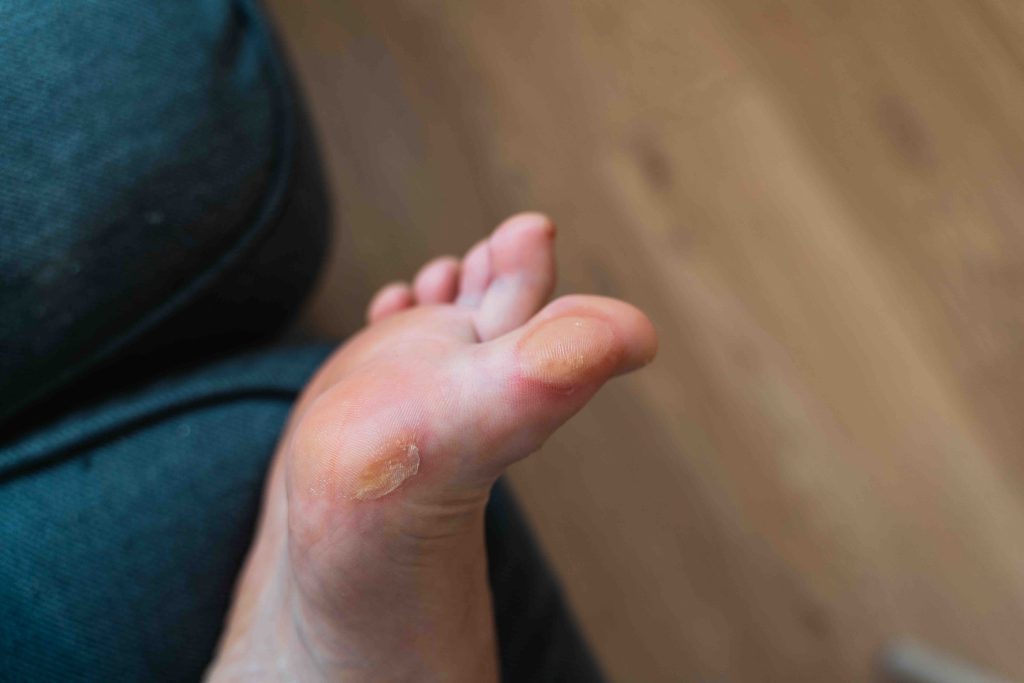
The blister is incredibly large, painful, and located on a weight-bearing area (like the heel or ball of the foot).
The blister is filled with yellow or green pus, is hot to the touch, and is surrounded by redness (signs of infection).
The blister has popped and the underlying raw skin is severely painful or bleeding.
You are diabetic or have poor circulation, meaning a blister can quickly escalate into a dangerous foot ulcer.
Why Do Corns and Blisters Form?
Both corns and blisters are caused by mechanical stress—specifically friction and pressure.
| Cause | Impact on the Foot |
|---|---|
| Narrow Toe-Boxes | Pointed shoes squeeze the toes together, causing soft corns between them and hard corns on the outside edges. |
| Loose Footwear | Shoes that slip cause your foot to slide forward and backward, creating shear friction that forms blisters on the heels. |
| Foot Deformities | Bunions, hammertoes, or claw toes create raised bony joints that rub aggressively against the roof of your shoes. |
| Loss of Fat Pads | As we age, the natural cushioning on the bottom of the foot thins out, leading to corns over the metatarsal bones. |
| Intense Activity | Long-distance running, hiking, or starting a new sport places sudden, extreme friction on unconditioned skin. |
Our Treatment Process: Instant Relief
There is no need to suffer for weeks with a painful corn or an infected blister. Our clinical interventions provide immediate comfort.
Corn Removal (Enucleation)
Assessment
We confirm whether the lesion is a corn or a verruca (as they look similar but require completely different treatments).
Painless Scalpel Debridement
Using a sterile surgical scalpel, our podiatrists skillfully pare away the overlying hard skin.
Enucleation
We gently and precisely scoop out the hard central core (the nucleus) of the corn. Because the corn is made of dead skin, this process is completely painless. Patients feel immediate, total relief the second they stand up.
Pressure Relief
We may apply clinical padding or deflective dressings to keep pressure off the area while it recovers.
Clinical Blister Care
Sterile Drainage
If a blister is massive, tense, and incredibly painful, we will safely drain the fluid using sterile medical instruments while keeping the blister’s protective roof intact to prevent infection.
Debridement of Torn Skin
If a blister has burst and the edges are jagged and painful, we will carefully trim the dead skin to allow for smooth healing.
Medical Dressing
We apply specialised, sterile hydrocolloid dressings or clinical padding to protect the raw skin, accelerate healing, and prevent further friction.
Serving Croydon and Surrounding Areas
Our modern, welcoming clinic at Collaborative One, 360 Brighton Road, South Croydon (CR2 6AL) is easily accessible, making it simple to get the premium foot care you deserve. We regularly welcome clients from:
- South Croydon & Central Croydon
- Purley & Kenley
- Sanderstead & Selsdon
- Shirley & Addiscombe
- Coulsdon
- Waddon & Wallington
Located on Brighton Road, South Croydon (CR2), Medi Pedicure is perfectly situated for easy access.
Frequently Asked Questions
We want you to feel fully informed and confident before booking your appointment. Here is everything you need to know about corns and blisters.
Can I use medicated corn plasters from the pharmacy?
We strongly advise against using medicated corn plasters. These plasters contain salicylic acid. The acid cannot tell the difference between the dead skin of the corn and the healthy skin surrounding it. Very often, the plaster shifts slightly, and the acid burns the healthy skin, creating a painful chemical ulcer that is far worse than the original corn. Always have a corn removed safely with a scalpel by a podiatrist.
Does removing a corn hurt?
No. The core of the corn is entirely made up of dead keratinocytes (dead skin cells) with no nerve endings. When we enucleate (remove) the core with a scalpel, you will just feel a slight pressure or scraping sensation. The relief from the stabbing pain is usually instantaneous.
Will my corn grow back?
A corn is a symptom of pressure, not a disease. If we remove the corn but you continue to wear the exact same tight shoes that caused it, the corn will eventually return. During your appointment, we will identify the cause of the pressure and advise you on footwear changes, toe props, or custom orthotics (insoles) to stop the corn from coming back.
Should I pop a blister myself?
Generally, no. The skin covering the blister provides a sterile environment for the new skin underneath to heal. Popping it with an unsterilised needle at home introduces bacteria and dramatically increases the risk of infection. If a blister is so painful that you cannot walk, book an appointment with us so we can drain and dress it in a sterile clinical environment.
What is the difference between a corn and a verruca?
They can look very similar on the bottom of the foot. However:
- Corns are caused by friction, hurt more when pressed directly inward, and have hard, waxy skin with no black dots.
- Verrucas are a viral infection, hurt more when pinched from the sides, disrupt the natural lines of your skin (fingerprints), and often have tiny black dots (dried blood vessels) inside them. Our podiatrists can diagnose which one you have immediately.
What is a "soft corn" and why does it hurt so much?
A soft corn (Heloma Molle) forms strictly between the toes, most commonly between the 4th and 5th (little) toes. It occurs when the bones of the two toes rub against each other inside tight shoes. Because the space between the toes is warm and sweaty, the hard skin absorbs moisture and becomes rubbery, white, and extremely tender. We can painlessly remove these and provide custom silicone wedges to keep the toes separated.
How can I stop blisters when running or hiking?
Prevention is key. We recommend:
- Wearing properly fitted shoes with a thumb’s width of space at the front.
- Wearing double-layer, moisture-wicking socks (never 100% cotton, which traps sweat).
- Applying surgical spirit to the skin in the weeks leading up to a big hike to toughen the epidermis.
- Using preventative taping (like zinc oxide tape) over known hot spots before you start.
Don't Let Pain Dictate Your Day
Whether it is a stabbing corn or a debilitating blister, foot pain changes the way you walk, which can lead to knee, hip, and back problems. Get instant relief today.