Fast & Painless Ingrown Toenail Treatment in Croydon
Need relief from an excruciating ingrown toenail?
If you have ever suffered from an ingrown toenail, you know that the pain can be excruciating. What starts as a mild tenderness can quickly escalate into a throbbing, swollen, and infected toe that makes wearing shoes or even sleeping with a bedsheet over your foot unbearable.
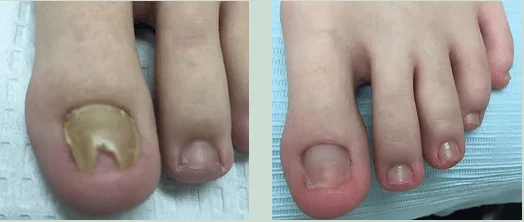
Back on Your Feet
At Medi Pedicure on Brighton Road, South Croydon, our expert podiatrists specialise in providing immediate relief for ingrown toenails (medically known as onychocryptosis). Whether you need a simple conservative clearing of a nail spike or a permanent minor surgical solution, we provide sterile, professional, and virtually painless care to get you back on your feet.

EXCELLENT Based on 21 reviews
 Posted on Google
 Eric MengiMy honest review,I am very happy with the treatment I got for my fungal nail.I waited a few weeks before I posted my review because I wanted to see if the treatment recommended worked. I can see an incredible improvement in my nail since my last appointment. I have been struggling with fungal nail for years and tried multiple other treatments which did nothing for me. I highly recommend Medical Pedicure clinic.Posted on Google
 Celia Addo MensahAn excellent reception and treatment received at Medical Pedicure. Podiatrist Maliheh was very nice and had confidence during the session . Maliheh followed her Superiors' instructions and did a fantastic jobPosted on Google
 Paige HarrisAmazing experience! My first medical pedicure - My feet feel so clean, soft and refreshed. The treatment was professional, thorough and relaxing. I’ll definitely be coming back!Posted on Google
 Nirmala AnthonipillaiExcellent service. Renda provided a beautiful treatment for my toe nail fungal infection that I feel much better and healthier on my nail. Thank you .Posted on Google
 Mehroz NaeemAmazing I have the deluxe medical pedicure and I left feeling line I am on cloud 9! Renda is amazing, skillful and is so kind to explain every step what she is doing with good level of clinic background! 100 percent it’s worth every penny! Without any judgement Renda took care of my feet with great passion!Posted on Google
 James Swann-PhillipsReally great service, strongly recommend.Posted on Google
 Vesta RoyI went because of ingrown toe nails, service and professionalism was 5 stars Now my feet are comfortable within my shoes again I definitely would recommend to family and friends or anyone who requires good servicePosted on Google
 Sam GboSkilled podiatrist, made me feel comfortable and confident about my feet, I have been embarrassed of my feet for years and she came and restored them to a healthy condition, I will definitely be coming backPosted on Google
 Donna HenryI had my ingrown toe nail removed,it was such a pain free process. I highly recommend this service.Posted on Google
 Amy SavageI had been struggling with a painful ingrown toenail for months and finally booked an appointment with MediPedicure Clinic after searching for an ingrown toenail specialist in Croydon. The podiatrist was friendly, professional and explained everything before starting treatment. The pain was relieved almost immediately, and I couldn't believe how much better my toe felt afterwards. The clinic was immaculate, and I wouldn't hesitate to recommend them to anyone needing professional ingrown toenail treatment.
Are You Suffering From Ingrown Toenails?
People don’t always search for ingrown toenail treatment. You might be looking for a chiropodist because you are experiencing:
A throbbing or extremely tender big toe (though it can happen on any toe)
Redness and swelling down the side of the nail
A feeling that the nail is digging into the flesh
Pus, bleeding, or clear fluid leaking from the side of the nail (signs of infection)
An overgrowth of red, angry tissue (hyper-granulation) around the nail border
Sharp pain when wearing enclosed shoes or walking
If you are dealing with any of these symptoms, do not attempt bathroom surgery to dig it out yourself. This almost always leaves a hidden nail spike behind and pushes bacteria deeper into the wound, making the infection much worse.
Why Do Toenails Ingrow?
Understanding the root cause helps us prevent the issue from recurring.
| Cause | How It Leads to an Ingrown Nail |
|---|---|
| Poor Cutting Technique | Cutting nails too short or tapering the edges leaves a sharp spike that pierces the skin as it grows. |
| Ill-Fitting Footwear | Tight shoes, high heels, or narrow toe-boxes squeeze the skin into the path of the growing nail. |
| Trauma | Stubbing your toe, dropping a heavy object, or repeated pressure from sports (like football or running) can alter nail growth. |
| Natural Nail Shape | Some people inherit naturally curved (involuted) or excessively wide or fan-shaped nails that are predisposed to ingrowing. |
| Fleshy Toes | Plump skin around the nail folds can easily overlap the nail plate. |
Our Treatment Process: Immediate Relief
At Medi Pedicure, we offer a tiered approach to treating ingrown toenails, depending on the severity of your condition.
Conservative Treatment (For mild to moderate cases)
If the toe is caught early, we can often resolve the issue without surgery. Using specialised, sterilised podiatry instruments, your podiatrist will gently and skillfully remove the offending nail spike that is piercing the skin. We then file the edge smooth and dress the toe. Patients usually feel immediate relief the moment they step off the chair.
Partial Nail Avulsion with Phenolisation (For severe, infected, or recurring cases)
If your nail repeatedly ingrows, is severely infected, or has altered its shape, we highly recommend a minor surgical procedure called a Partial Nail Avulsion (PNA).
We administer a local anaesthetic to completely numb the toe.
We remove only the small, ingrown section of the nail (not the whole nail).
We apply a chemical called phenol to the nail matrix (the root) to prevent that specific sliver of nail from ever growing back.
The result is a perfectly normal-looking, slightly narrower nail that will not ingrow again.
Serving Croydon and Surrounding Areas
Located on Brighton Road, South Croydon (CR2), Medi Pedicure is perfectly situated for easy access.
- South Croydon & Central Croydon
- Purley & Kenley
- Sanderstead & Selsdon
- Shirley & Addiscombe
- Coulsdon
- Waddon & Wallington
Located on Brighton Road, South Croydon (CR2), Medi Pedicure is perfectly situated for easy access.
Frequently Asked Questions
Will the treatment hurt?
Your comfort is our priority. For conservative treatments, our podiatrists are highly skilled at removing the spike with minimal discomfort; most patients say the relief far outweighs the brief pinch. If the toe is too painful to touch or you require surgery, we will use a local anaesthetic to completely numb the area first. You will feel nothing during the procedure.
I went to my GP and they gave me antibiotics. Why does it still hurt?
Antibiotics will clear the bacterial infection, but they cannot remove the piece of nail that is physically lodged in your skin. Think of it like a splinter; until the physical object is removed, the wound will not heal, and the infection will simply return once the antibiotics run out. You need a podiatrist to remove the nail spike.
Can I just cut a 'V' in the middle of my nail to fix it?
No. This is a very common old wives’ tale. Nails grow from the base (the matrix) outwards, not from the edges inwards. Cutting a ‘V’ in the top of the nail does absolutely nothing to change the trajectory of the nail edge that is already embedded in your skin.
Do I have to have the whole toenail removed?
Very rarely. We specialise in Partial Nail Avulsions, meaning we only remove the offending 2-3 millimetres down the side. Once healed, your nail will look completely normal, just slightly narrower. Total nail removal is an absolute last resort.
What is the recovery time if I have the minor surgery (PNA)?
You can walk out of the clinic immediately after the procedure, though we recommend bringing open-toed sandals or loose footwear, as you will have a bulky dressing on your toe. You should rest with your foot elevated for the remainder of the day. Most people return to work or school the next day. The toe will take about 4 to 6 weeks to fully heal, during which time you will need to do simple salt-water footbaths at home.
Can I play sports after the treatment?
If you have a conservative clearing, you can usually return to sports within a day or two. If you have a minor surgery, we advise avoiding high-impact sports, swimming, and football for about 2 to 4 weeks while the chemical burn from the phenol heals.
How can I stop it from happening again?
We will give you personalised advice during your appointment, but general rules include: cut your nails straight across (never down into the corners), ensure your shoes have a wide enough toe box so your toes can wiggle, and address any fungal infections that might be changing the shape of your nail.
Stop Suffering in Silence
An ingrown toenail will not fix itself, and delaying treatment only increases the risk of severe infection and worsening pain. Let our experts give you the relief you deserve.